



Same 925 Silver. Why Can One Supplier’s Manufacturing Charge Be So Much Lower?
Sometimes, the reason two suppliers quote dramatically different manufacturing charges for the exact same 925 sterling silver ring is straightforward: the quotation includes fewer finishing operations.
From our practical manufacturing experience with lower-priced silver products from regions like Haifeng (Shanwei), the price advantage frequently comes from skipping manual cleanup after casting. Some items receive minimal tumbling and little to no true hand-polishing before electroplating.
This is an objective observation regarding specific production models and commercial tiers—not every factory in a region operates identically. However, it illustrates a fundamental distinction that jewelry brand founders, designers, and sourcing managers must understand when evaluating OEM/ODM bids.
1. Why Manufacturing Quotes Differ for the Same 925 Silver
When you provide a CAD drawing or design spec for a 925 sterling silver collection, the raw metal material cost per gram is determined by the live commodity spot market (see our analysis on How Rising Silver Prices Change Jewelry Manufacturing Decisions). Because raw silver cost is virtually identical across factories, the primary variance in your Unit Landed Cost comes down to two factors:
- Target metal weight variance (hollowing out structures vs solid casting);
- Labor time allocated to post-casting finishing and surface preparation.
A supplier quoting $2.50 for manufacturing labor versus another quoting $5.80 is rarely offering "free efficiency." In most cases, they are quoting completely different scopes of manual workmanship.
2. What "Skipping a Process" Means in Practice: The Role of "执磨"
After liquid silver is injected into investment plaster moulds and cooled, the raw casting tree is broken down. At this immediate stage, a silver piece inevitably possesses:
- Casting sprue cut marks (rough protruding nubs where molten metal entered);
- Microscopic mould parting lines and flash edges;
- Uneven surfaces and micro-porosity from thermal shrinkage;
- Rough or unrefined contours along the inner ring shank and pendant backs.
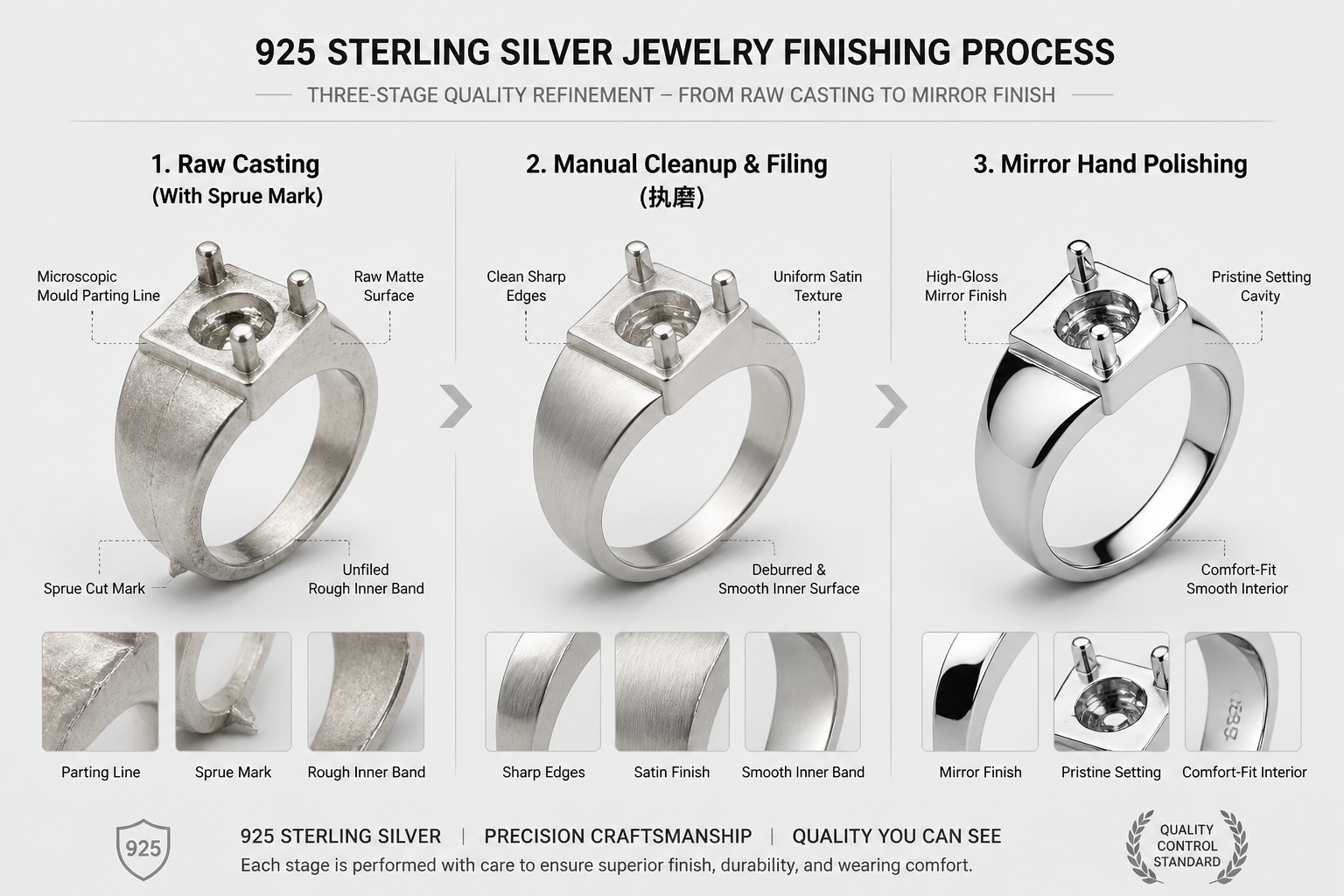
Figure 1: The 3 evolutionary stages from raw casting with sprue nubs to manual filing (执磨) and final mirror hand-polishing.
Cutting the sprue with pliers is only step one. In a quality-focused factory, a skilled artisan must use precision hand files, abrasive sticks, and micro-motor burs to deburr, file, and smooth the piece, meticulously refining its curves and structural edges before polishing. This manual cleanup is what Chinese jewelers call “执磨” (Zhí Mó - Manual Pre-Finishing & Filing).
If that manual filing is drastically reduced or omitted:
- Direct labor costs plummet: A worker can process 300 pieces an hour instead of 40;
- Hidden defects remain: Parting lines, sprue scars, and rough sharp edges stay intact—particularly on the inner shank, hollowed recesses, under-bezels, and intricate filigree.
3. The Polishing Divide & The Plating Illusion
Polishing is an entirely separate, multi-tiered operation. There is a vast difference between bulk centrifugal barrel tumbling and dedicated multi-stage hand buffing:
| Finishing Method | Labor Time | Visual Result in Studio Photos | Real Physical In-Hand Feel |
|---|---|---|---|
| Batch Machine Tumbling Only | Minimal (Minutes per 500 pcs) | Looks shiny under studio flash | Rough inner edges, rounded corners, orange-peel texture |
| AIU 3-Stage Hand Buffing & Polishing | High (Dedicated bench time) | Flawless distortion-free reflection | Silky comfort-fit inner shank, crisp architectural angles, zero sprue marks |
Whether you apply standard flash plating or heavy 2.5µm Gold Vermeil (see our Gold Vermeil Plating Thickness Guide), electrodeposited metal layers are only fractions of a micron thick. Plating will conform precisely to the topography underneath. If the raw silver was not cleanly filed and hand-buffed, the electroplating will highlight, not hide, casting roughness.
4. What You Are Actually Paying For
This is why two manufacturing quotations for "the same 925 silver ring" are fundamentally different products:
- Quote A (Low-Cost Focus): Basic melting and casting, quick sprue clipping, bulk magnetic tumbling, and immediate surface flash plating. No individual quality inspection or corrective touch-ups.
- Quote B (Brand-Grade OEM/ODM): Precision vacuum casting, complete manual 执磨 (sprue grinding, contour truing, inner band smoothing), multi-stage hand polishing, microscopic stone-seat inspection, ultrasonic degreasing, and rigorous QC before plating and packing.
Both use authentic 925 sterling silver. The difference lies in the human craft hours invested.
5. Buyer Technical Checklist: 4 Questions to Ask Before Accepting a Lower Quote
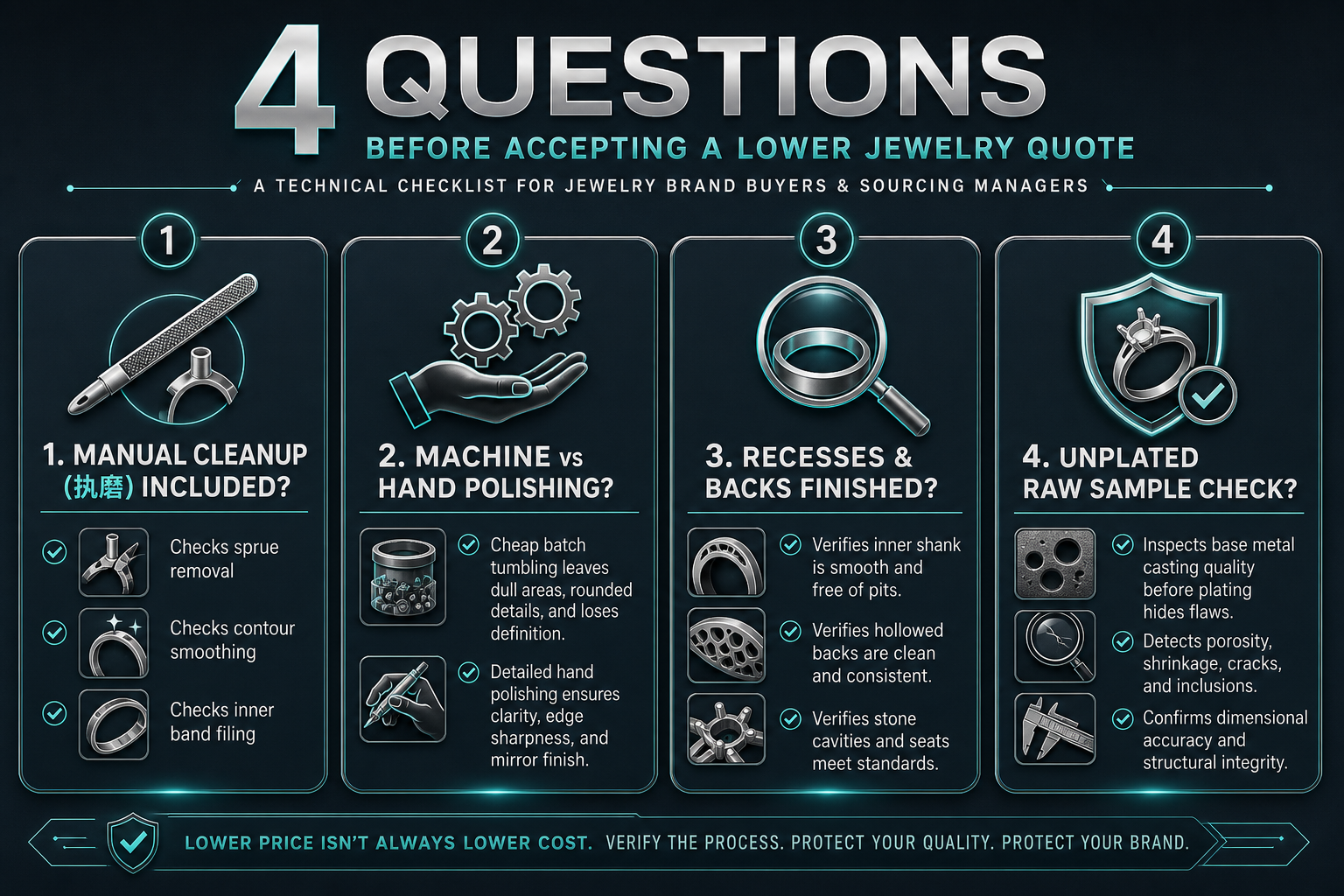
Figure 2: The 4-step procurement verification protocol for evaluating jewelry OEM manufacturing charges.
Before accepting a significantly lower quotation that seems too good to be true, send these 4 technical questions to your factory:
- Is manual post-casting cleanup (执磨) explicitly included? Verify that sprue cut points and parting seams are manually filed smooth.
- What proportion of finishing is performed by machine vs. hand buffing? Clarify if high-wear contact surfaces receive individual artisan buffing.
- Are interior shanks, hollowed backs, and stone recesses included in the finishing standard? Confirm that hidden areas meet your brand‘s tactile comfort threshold.
- Can we inspect an unplated silver sample alongside the finished gold-plated piece? Examining raw silver reveals the true quality of casting and filing before plating masks the metal.
Frequently Asked Questions (FAQ)
Q1: Does a low manufacturing charge always mean skipped processes?
Not necessarily. Higher production volume (e.g., 5,000+ units per SKU), simpler geometric silhouettes, or specialized semi-automated tooling can naturally drive labor costs down. However, for intricate designs or small-to-mid batches (50–300 pcs), an unusually low price is almost always tied to reduced finishing hours.
Q2: Does matte or sandblasted jewelry require the same level of 执磨 (manual filing)?
Yes! Sandblasting and satin brushing alter the surface sheen, but they do not eliminate sprue marks, casting porosity, or sharp jagged edges. In fact, uneven filing becomes even more obvious under a uniform matte finish.
Q3: How can we specify finishing standards in our Tech Pack?
In your product Tech Pack (download our Jewelry Tech Pack Checklist), explicitly define surface roughness thresholds, sprue flush tolerances (≤0.05mm), and inner-edge chamfer requirements to eliminate quote ambiguities.
Looking for Transparent, Brand-Grade 925 Silver Manufacturing?
At AIU Jewelry, every quote provides a complete breakdown of metal weight, manual filing (执磨), multi-stage polishing, and micron-level plating specifications with zero hidden cuts.
Request a Feasibility Review & Quote anya907888